4 Sep 2026
Beer Tasting Guide for Beginners Made Simple
A beer tasting guide for beginners with clear steps for noticing aroma, flavour, mouthfeel and finish, then remembering what you genuinely enjoy at home.
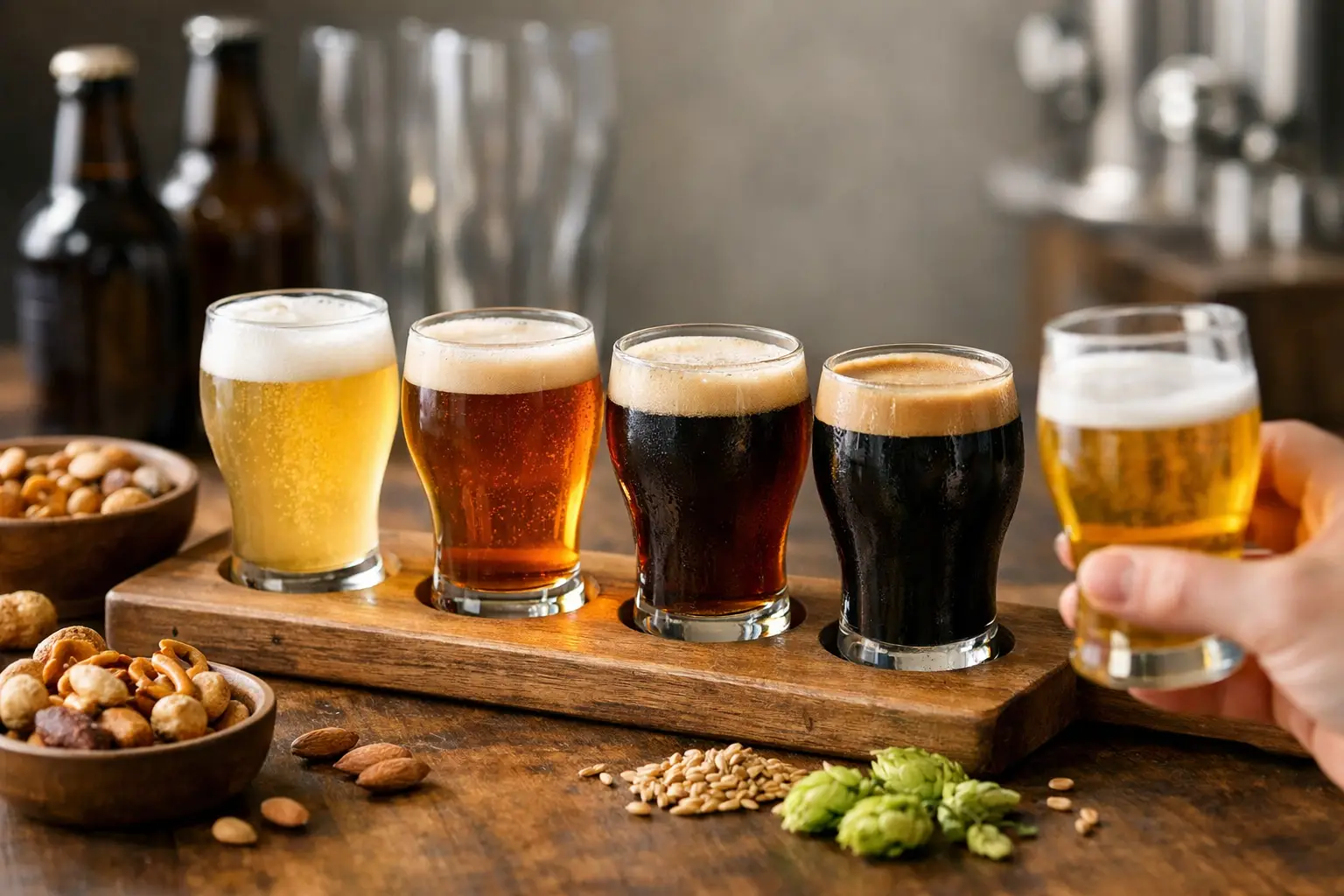
The most useful thing you can bring to a beer tasting is not specialist glassware or a long list of beer styles. It is permission to slow down. This beer tasting guide for beginners gives you a simple way to pay attention to what is already in your glass, without pretending there is one correct answer or a secret vocabulary you need to know.
You may notice that one pale ale feels bright and zesty while another seems soft and bready. You might prefer a dry stout to a sweet one, or decide that a famously bitter IPA simply is not for you. All of those observations count. Tasting is not a test of expertise. It is a practice of noticing, comparing and remembering.
Set up a relaxed first tasting
Choose two or three beers rather than opening everything at once. A small tasting pour is enough - around 100ml per beer gives you plenty to assess without turning the occasion into a challenge to finish each glass. Taste only when you can give it your attention, and stop whenever you wish.
Pour each beer into a clean, unperfumed glass. A stemmed tulip glass is helpful for concentrating aroma, but an ordinary wine glass or small tumbler will do well. What matters most is that there is room above the beer for its aroma to gather. Avoid strongly scented candles, cooking smells and fragranced hand cream, as these can make subtle notes harder to notice.
Temperature changes what you perceive. Very cold beer can seem less aromatic and less flavourful, while beer served too warm may feel loose or overly sweet. Lagers and lighter wheat beers are usually enjoyable chilled, but not icy. Richer ales, porters and stouts often reveal more as they sit for a few minutes. There is no need to chase exact temperatures at first. Simply notice whether the flavour changes as the beer warms slightly.
Keep water nearby, and have plain bread or unsalted crackers if you are tasting several beers. They can refresh your palate between samples. Strong coffee, spicy snacks and minty chewing gum are less helpful because they stay with you.
A beer tasting guide for beginners: use four quiet steps
Professional tasting can sound elaborate, but the process is straightforward. Look, smell, sip and reflect. Give each stage a little time before moving on.
Look before you judge
Hold the glass against a pale background. Notice the colour first: straw, gold, amber, copper, brown or near-black are useful starting points. Colour can suggest the grains used, but it does not tell you exactly how a beer will taste. A dark beer can be light-bodied and refreshing; a pale beer can be rich and intense.
Then look at clarity and the head. Is the beer bright, hazy or cloudy? Is the foam fine and persistent, or does it disappear quickly? Haze is not automatically a flaw. In some styles, such as a wheat beer or a hazy IPA, it is entirely expected. Rather than deciding whether it is good or bad, describe what you see.
Smell with curiosity
Swirl gently if the glass has space, then take two or three short sniffs. The first impression may be broad: fresh, sweet, grainy, fruity, roasted, herbal or spicy. That is enough. If a specific memory comes to mind, trust it. Perhaps it smells like lemon peel, toasted bread, mango, black pepper, cocoa, pine needles or biscuits.
Aroma generally comes from malt, hops, yeast and fermentation. Malt can suggest bread crust, caramel, nuts or chocolate. Hops may bring citrus, flowers, herbs, resin or tropical fruit. Yeast can add notes such as banana, clove or pear, particularly in Belgian-inspired and wheat beers. These are guides, not rules. A beer may offer several at once, and your perception can differ from someone else's.
If you smell very little, let the beer rest for a moment and try again. You may also be smelling through a cold or a busy environment. That is normal, not a failure of your palate.
Take a proper sip
Take a modest sip and let it move across your tongue before swallowing. Try not to search for every possible flavour immediately. Start with the shape of the beer in your mouth. Does it feel light and crisp, rounded and smooth, creamy, silky, fizzy, sticky or drying?
This is mouthfeel, and it is often the missing piece when people try to explain why they like one beer more than another. Carbonation can feel lively or gentle. Body can be delicate, medium or full. Bitterness can arrive quickly, build at the end, or stay restrained. A beer can be bitter without being harsh, and sweet without being cloying.
Now consider flavour. Does the taste match the aroma? You might find citrus and fresh grass in a pilsner, marmalade and pine in an IPA, or coffee, dark chocolate and toast in a stout. Keep your language plain. Saying “this reminds me of burnt toast and orange peel” is far more useful than reaching for a technical term that does not feel natural.
Pause for the finish
After you swallow, wait a few seconds. What remains? The finish may be short and clean, long and warming, dry, sweet, bitter, roasted or slightly sour. This final stage is where balance becomes clearer.
Ask yourself whether you want another sip. It is a simple but revealing question. A beer can be impressive yet not something you would choose regularly. Another may be uncomplicated but exactly right for a sunny afternoon or a meal with friends. Preference is shaped by context, not just perceived quality.
Build better tasting language without sounding rehearsed
You do not need to memorise a flavour wheel. Start with contrasts that are easy to feel: light or full, crisp or soft, dry or sweet, gentle or bitter, clean or fruity. These pairs help you describe a beer even when you cannot name a precise aroma.
It also helps to separate what you observe from what you prefer. “This has a firm, lingering bitterness” is an observation. “I find that bitterness a little too intense” is your preference. Both are valid, and together they create a much more useful memory than a score out of ten.
Try writing three short notes after each beer: what it smelled like, how it felt in your mouth and whether you would drink it again. Add the setting if it mattered. A smoky porter may feel perfect beside a winter supper but too heavy at a summer barbecue. Over time, patterns emerge. Perhaps you enjoy citrus-led hops but not resinous ones, or creamy texture but not high sweetness.
Audio Sommelier can support this habit with guided audio prompts and a personal tasting record, helping you turn a passing impression into something you can compare later. The goal is not to collect more data for its own sake. It is to make your next choice feel more confident.
Choose beers that make comparison easy
For an early tasting, contrast is more helpful than complication. Pick beers with recognisably different profiles, such as a crisp lager, a pale ale, a wheat beer and a stout. You will quickly notice how grain, hops, yeast and roasting affect appearance, aroma and texture.
Taste from lighter to fuller flavours. Begin with the lager or wheat beer, move to pale ale, then finish with darker or stronger beer. This keeps a highly roasted, sweet or bitter sample from overwhelming the more delicate ones. If you are comparing two similar beers, such as two pale ales, taste them side by side. The differences will often become clearer than they would on separate evenings.
Do not assume that the most expensive bottle or can will be your favourite. Freshness, storage and personal taste all matter. Hop-forward beers often show their brightest aromas when fresh, while some stronger, malt-led styles can develop pleasantly over time. If a beer tastes unexpectedly flat, stale or papery, check its best-before date and how it was stored before judging the style as a whole.
Common beginner worries, answered
What if I cannot identify the aromas?
Start broad. “Fruity”, “bready” or “roasted” is a good observation. Specific references become easier when you have tasted more examples, but they are never a requirement. Aroma memory is personal, so the first thing you notice may be the most honest description.
Should I spit beer when tasting?
For a small home tasting, you do not have to. If you are sampling many beers, stronger styles, or simply prefer not to consume alcohol, spitting is a sensible option. Tasting is about attention, not quantity.
Is bitterness the same as a bad beer?
No. Bitterness is a structural element, much like acidity in wine. Some beers use it lightly for balance; others make it a central feature. A beer may be well made and still not suit your preference. That distinction lets you explore with more confidence and less pressure to like everything.
The next time you open a beer, give it five unhurried minutes before the conversation moves on. Notice one aroma, one texture and one detail that stays after the sip. That small ritual is enough to make a familiar bottle feel more considered - and to help you choose your next one with clearer instincts.